Pal Ghat, popularly known as Palakkad Gap or Palghat Gap, is one of the most significant and widest mountain passes in the Western Ghats. Located on the border of Kerala and Tamil Nadu, it serves as a vital natural corridor connecting the eastern and western parts of southern India. Unlike narrow ghats with steep hairpin bends, Pal Ghat is a broad, low-altitude pass that has shaped history, trade, climate, and biodiversity in the region.
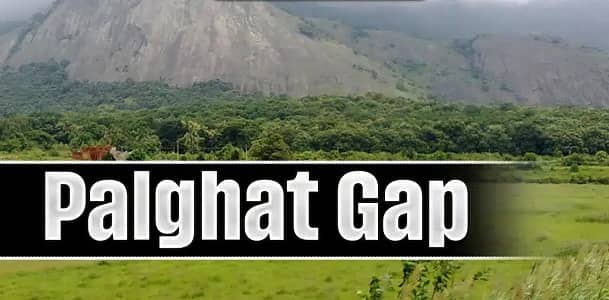
Location of Pal Ghat
Pal Ghat lies between the Nilgiri Hills to the north and the Anaimalai Hills to the south. It stretches approximately 24–40 km wide at an average elevation of just 140 meters, making it the lowest and broadest gap in the Western Ghats. It connects Coimbatore (Tamil Nadu) with Palakkad (Kerala).
This gap is a major geological feature formed due to ancient tectonic movements and acts as a natural gateway for the southwest monsoon winds, influencing rainfall patterns across southern India.
Directions and How to Reach Pal Ghat
From Coimbatore (Tamil Nadu):
Approximately 40–50 km. The drive takes 1–1.5 hours via NH544.
From Palakkad (Kerala):
Around 30–40 km. Easily reachable by road.
From Kochi:
About 140–160 km (3–4 hours drive).
From Bengaluru:
Around 380–400 km via Salem-Coimbatore route.
The Palakkad Gap is well-connected by excellent national highways, railways, and the Coimbatore International Airport (nearest major airport). Both road and rail routes pass through this gap, making it one of the busiest transport corridors in South India.
Timings at Pal Ghat
As a mountain pass, Pal Ghat is open 24 hours with no entry fee.
Best Driving Hours:
- Early Morning (6:00 AM – 10:00 AM) — Best for clear views and pleasant weather.
- Late Afternoon (3:00 PM – 6:30 PM) — Good light for photography.
Best Time to Visit:
October to March for comfortable weather and clear visibility. Monsoon (June–September) brings lush greenery but heavy rainfall and occasional landslides.
Significance and Atmosphere
Pal Ghat has been a historic trade route since ancient times, used by Roman, Arab, and later European merchants. It serves as a biogeographical boundary, influencing the distribution of flora and fauna between the eastern and western sides of the Western Ghats. The gap also plays a crucial role in moderating Tamil Nadu’s climate by allowing moisture-laden winds to pass through.
The atmosphere is open, expansive, and refreshing. As you travel through the gap, you experience a dramatic transition from the coastal plains of Kerala to the drier Tamil Nadu side, with scenic views of distant hills, farmlands, and windmills.
Nearby Places to Visit
- Palakkad Fort — Historic fort built by Hyder Ali.
- Silent Valley National Park — Biodiversity hotspot (about 70 km).
- Coimbatore — Major city with temples and business hubs.
- Nelliyampathy Hills — Scenic hill station with tea plantations.
- Parambikulam Tiger Reserve — Excellent wildlife sanctuary.
- Malampuzha Dam & Garden — Popular picnic spot near Palakkad.
Frequently Asked Questions (FAQs)
Q: What is Pal Ghat famous for?
A: It is famous as the widest and lowest mountain pass in the Western Ghats, serving as a major transport corridor between Kerala and Tamil Nadu.
Q: Where is Pal Ghat located?
A: On the Kerala–Tamil Nadu border, between Palakkad (Kerala) and Coimbatore (Tamil Nadu).
Q: How to reach Pal Ghat from Coimbatore?
A: 40–50 km; 1–1.5 hours by road via NH544.
Q: Is there an entry fee for Pal Ghat?
A: No entry fee. It is a natural mountain pass open to all.
Q: What are the best nearby places to Pal Ghat?
A: Palakkad Fort, Silent Valley National Park, Nelliyampathy, and Malampuzha Dam.
Q: Is Pal Ghat suitable for families?
A: Yes, it is very family-friendly as it is a wide, well-connected highway route with good facilities.
Q: Can I see good views while travelling through Pal Ghat?
A: Yes, especially during early morning or late afternoon. The transition between the two states offers scenic farmland and hill views.
Q: What should I carry when visiting?
A: Water, snacks, camera, motion sickness medicine (if sensitive to long drives), and rain protection during monsoon.
Overall, Pal Ghat (Palakkad Gap) stands as a natural wonder and strategic gateway in southern India. Its unique geography, historical importance, pleasant climate, and role as a vital link between two states make it an impressive and essential part of any journey through the Western Ghats.