Sliding doors often occupy some of the largest glazed openings in a home. That makes the frame material more important than it might appear. A balcony door measuring several metres across has to carry substantial glass weight, move smoothly thousands of times and withstand sun, rain and wind while still closing properly.
Aluminium and uPVC are two popular choices for such installations in Indian homes. Aluminium is generally the stronger option for large openings, slim frames and contemporary designs, while uPVC has an advantage when thermal insulation and value for money are higher priorities.
The final performance, however, depends heavily on profile quality, glass, rollers, locks, reinforcement, sealing and installation.
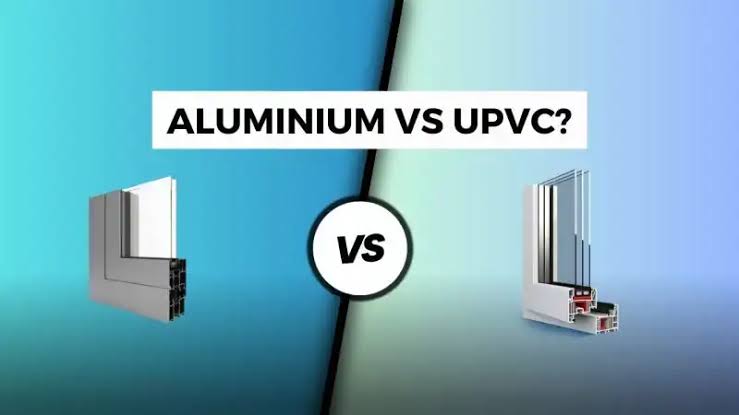
Aluminium vs uPVC Sliding Doors: Quick Comparison
| Feature | Aluminium Sliding Doors | uPVC Sliding Doors |
|---|---|---|
| Structural strength | Excellent | Good |
| Frame thickness | Usually slimmer | Usually thicker |
| Large glass panels | Excellent | More size-dependent |
| Thermal insulation | Moderate; better with thermal break | Generally better |
| Weather resistance | Excellent with good finish | Very good |
| Maintenance | Low | Low |
| Design | Slim, contemporary | Heavier frame appearance |
| Colour choices | Extensive | Good |
| Corrosion | Does not rust | Does not rust |
| Typical suitability | Large balconies/openings | Homes prioritising insulation/value |
What Are Aluminium Sliding Doors?
Aluminium sliding doors use extruded aluminium profiles to support glass panels that move horizontally along tracks.
One of aluminium’s biggest advantages is its strength-to-weight ratio. It can support comparatively large glass panels while keeping frame sections relatively slim.
This is why aluminium is commonly seen in large balcony openings, premium apartments and contemporary houses.
Aluminium is also durable and relatively low-maintenance. Independent window-performance guidance describes aluminium frames as light, strong and durable, although conventional aluminium readily conducts heat.
Modern systems can address this thermal weakness through improved glazing and thermally broken frames.
What Are uPVC Sliding Doors?
uPVC stands for unplasticised polyvinyl chloride.
Unlike aluminium, it is a non-metallic framing material. uPVC profiles are typically multi-chambered and may incorporate reinforcement where required by the design and dimensions.
The material is popular for windows and doors because it requires little routine maintenance and provides good thermal insulation.
The profiles are generally bulkier than aluminium profiles, however, which can affect the amount of visible frame around large glazed openings.
For ordinary residential balcony doors and moderate opening sizes, a properly designed uPVC sliding system can still be a practical choice.
1. Strength and Large Openings
Winner: Aluminium
This is where aluminium has its clearest advantage.
Sliding doors can become large and heavy, particularly when using tall glass panels or double glazing. The frame must remain sufficiently rigid while supporting the glazing and operating hardware.
Aluminium’s structural strength allows manufacturers to produce relatively slim profiles capable of accommodating substantial glazed panels. Aluminium is widely used for large sliding systems partly for this reason.
Premium aluminium systems can accommodate very large doors. For example, individual tested systems available in India specify heights of around 3 metres or more, although allowable dimensions depend entirely on the particular product, glass and configuration.
For a normal apartment balcony, either material may work.
For a wide floor-to-ceiling opening, aluminium deserves serious consideration.
2. Thermal Insulation
Winner: uPVC, generally
Basic aluminium is a strong conductor of heat.
Independent guidance from the Efficient Windows Collaborative notes that high thermal conductance is the main disadvantage of conventional aluminium frames.
uPVC does not conduct heat in the same way as metal and therefore has an inherent thermal advantage.
But the comparison becomes more complicated with premium products.
A thermally broken aluminium frame separates the interior and exterior metal sections using a less conductive material. This can substantially reduce heat transfer through the frame.
Glass is also extremely important because it occupies most of a large sliding door.
Double glazing, low-E coatings and an appropriate solar heat gain coefficient can have a major effect on overall thermal performance.
Therefore, compare the complete door rather than the frame material alone.
3. Slim Frames and Appearance
Winner: Aluminium
If you want large areas of glass with minimal visible framing, aluminium usually has the advantage.
Its strength allows relatively narrow profiles to support the glazing.
The result can be:
- Larger-looking glass panels
- Cleaner sightlines
- More contemporary appearance
- Better visual connection with balconies or gardens
uPVC profiles generally need larger sections, creating a more substantial border around the glass.
This is not necessarily unattractive. It simply produces a different visual style.
For minimalist contemporary architecture, aluminium is usually preferred.
4. Weather Resistance
Winner: Both, when properly specified
Neither aluminium nor uPVC suffers from the same moisture-related problems associated with untreated timber.
Aluminium does not rust like ordinary steel, while quality surface finishes can improve its long-term weather resistance.
uPVC also handles rain and humidity well and does not require painting.
But frame material alone does not determine whether rainwater enters your house.
A sliding door’s water resistance depends on:
- Track design
- Drainage
- Gaskets
- Interlocking sections
- Manufacturing tolerances
- Installation
Some engineered aluminium sliding systems, for example, publish specific laboratory-tested air, water and wind-pressure performance figures.
When purchasing either material, ask for tested performance information rather than relying only on claims such as “100% waterproof.”
5. Maintenance
Winner: Tie
Both materials are relatively low-maintenance.
Aluminium generally needs periodic cleaning, while quality factory finishes eliminate routine painting.
uPVC also does not normally require repainting.
For sliding doors, the parts that often need more attention are not the frames themselves but the tracks, rollers, locks and drainage channels.
Dust and debris inside a track can make even an expensive sliding door difficult to operate.
Clean the tracks regularly and follow the manufacturer’s maintenance instructions for rollers and hardware.
6. Durability
Winner: Aluminium for demanding large installations
Material alone cannot provide a guaranteed lifespan. Design, workmanship, glazing, hardware, exposure and installation all influence how long a door performs properly.
Independent guidance describes aluminium as strong and durable while emphasising that overall durability depends substantially on design and workmanship.
Quality uPVC can also provide long service in residential applications.
The difference becomes more relevant with very large doors, where structural rigidity and glass weight place greater demands on the frame.
This is another reason aluminium is frequently preferred for oversized architectural sliding systems.
7. Sound Insulation
Winner: Depends on the complete system
It would be misleading to choose uPVC or aluminium based purely on claims of better soundproofing.
Glass configuration, seals, gaps, frame design and installation can matter more.
A poorly installed premium door can allow more noise through gaps than a properly installed mid-range system.
For a home facing a busy road, compare tested acoustic performance where available and consider appropriate laminated or insulating glass.
Some aluminium sliding systems available in India publish laboratory-tested noise-reduction figures, demonstrating that aluminium systems can also achieve meaningful acoustic performance when properly engineered.
8. Security
Winner: Depends on hardware and design
Aluminium’s structural strength is useful, but security cannot be judged from frame material alone.
Look at:
- Multi-point locking
- Lock quality
- Interlocking profiles
- Glass specification
- Frame anchoring
- Anti-lift features
- Installation quality
Large sliding doors should use appropriate safety glazing as required for their location and dimensions.
Do not select a door simply because the salesperson describes one frame material as “more secure.”
Compare the entire tested system.
9. Cost
Winner: uPVC often targets value-focused residential installations, but compare quotations
There is no reliable universal statement that one material will always cost a particular percentage more.
Prices depend on:
- Profile series
- Door dimensions
- Number of tracks
- Glass specification
- Reinforcement
- Rollers
- Locks
- Mesh
- Finish
- Brand
- Installation
Large premium aluminium systems can become expensive, particularly when slim architectural profiles and high-performance glazing are used.
However, premium uPVC doors can also cost significantly more than basic aluminium products.
Get quotations using exactly the same opening dimensions and similar glass specifications before comparing prices.
Which Is Better for Indian Homes?
Choose aluminium sliding doors when:
- You have a very large opening.
- You want slim frames.
- Floor-to-ceiling glass is important.
- A contemporary appearance is a priority.
- Structural rigidity is particularly important.
Choose uPVC sliding doors when:
- Thermal insulation is a major priority.
- The opening is within the system’s recommended dimensions.
- You prefer thicker conventional residential profiles.
- You want a low-maintenance solution.
- Budget is a significant consideration.
For a large living-room opening leading to a balcony or garden, aluminium can be particularly attractive because of its strength and narrow profiles.
For bedrooms and conventional balcony openings where insulation and budget matter more than extremely slim sightlines, uPVC can be a sensible alternative.
Don’t Compare Frame Material Alone
The biggest purchasing mistake is asking only:
“Aluminium or uPVC?”
Instead, compare two complete door specifications.
Ask the supplier for the profile series, maximum permitted panel dimensions, glass specification, locking system, roller capacity, air and water performance where tested, warranty and installation method.
For energy performance, compare whole-unit characteristics where available. Frame and glazing both affect a window or glazed door’s overall thermal behaviour.
A well-engineered uPVC door can outperform a cheap aluminium door, while a thermally broken premium aluminium system can outperform a basic product in several areas.
Quality of the complete system matters more than the material name printed on the quotation.
FAQs
Q1. Which is better, aluminium or uPVC sliding doors?
A. Aluminium is generally better for large openings, slim frames and structural strength. uPVC generally offers better inherent thermal insulation and can be a practical choice for standard residential openings.
Q2. Which sliding door is better for a large balcony?
A. Aluminium is often preferred for very large balcony openings because its structural strength allows larger glass panels and slimmer frame sections. The actual maximum size must be checked for the selected system.
Q3. Is uPVC better than aluminium for heat insulation?
A. Conventional uPVC generally has better inherent thermal insulation because aluminium conducts heat readily. Thermally broken aluminium substantially improves aluminium’s thermal performance.
Q4. Which material requires less maintenance?
A. Both are low-maintenance. Sliding tracks, rollers, locks, gaskets and drainage usually need more routine attention than the aluminium or uPVC frame itself.
Q5. Which sliding door lasts longer?
A. There is no universal lifespan because durability depends on product quality, dimensions, exposure, hardware, installation and maintenance. Aluminium’s strength gives it an advantage for demanding and oversized installations, while good-quality uPVC can provide long service in standard residential applications.