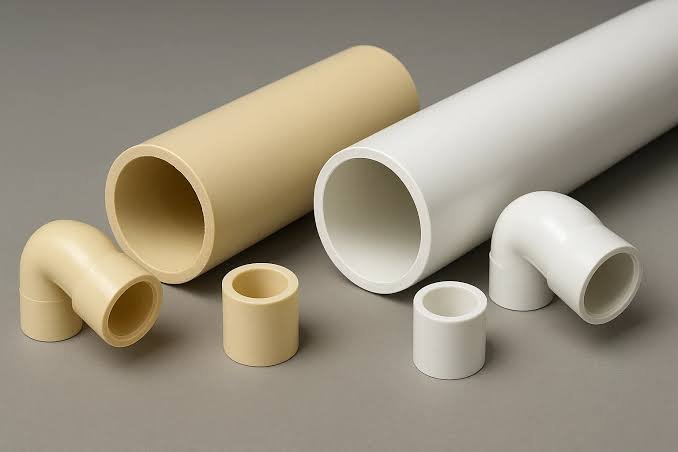
The easiest way to choose between CPVC and UPVC pipes is to look at the water they will carry. A pipe supplying cold water from an overhead tank has different requirements from one carrying hot water from a geyser to a bathroom.
Although CPVC and UPVC belong to the PVC family, they are not interchangeable for every plumbing application. In India, BIS maintains separate standards for them: IS 15778:2007 covers CPVC pipes for potable hot and cold water distribution, while IS 4985:2021 covers unplasticized PVC pipes for potable water supplies.
For most homes, the practical answer is straightforward: CPVC is generally the better choice for internal hot-and-cold water plumbing, while UPVC is a practical and economical option for suitable cold-water supply applications.
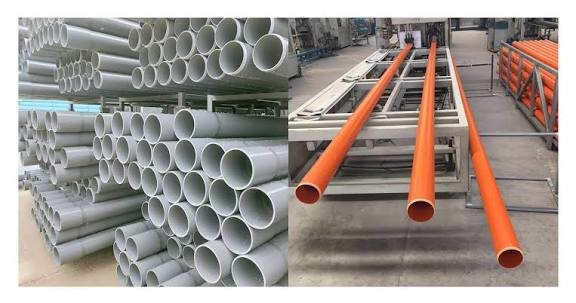
CPVC vs UPVC Pipes: Quick Comparison
| Feature | CPVC Pipes | UPVC Pipes |
|---|---|---|
| Full form | Chlorinated Polyvinyl Chloride | Unplasticized Polyvinyl Chloride |
| Hot water | Yes | Generally not selected for hot-water plumbing |
| Cold water | Yes | Yes, with suitable water-supply pipe |
| BIS water-supply standard | IS 15778:2007 | IS 4985:2021 |
| Temperature capability | Higher | Lower than CPVC |
| Corrosion resistance | Excellent | Excellent |
| Internal plumbing | Very suitable | Mainly cold-water applications |
| Typical cost | Higher | Lower |
| Joining | Usually solvent-cement system | Usually solvent-cement system |
| Common home use | Hot + cold plumbing | Cold-water supply |
What Is CPVC Pipe?
CPVC stands for Chlorinated Polyvinyl Chloride.
The additional chlorination of the PVC material changes its properties and allows properly specified CPVC piping to withstand higher water temperatures than conventional UPVC.
This is the main reason CPVC is commonly used for internal residential plumbing.
The BIS standard IS 15778:2007 specifically covers CPVC pipes for potable hot and cold water distribution. BIS’s current listing shows that the standard has received five amendments, with the latest amendment dated 2025.
The standard specifies CPVC pipes intended for water service up to and including 82°C.
That makes CPVC suitable for plumbing lines connected to geysers and other normal residential hot-water systems when the complete piping system is correctly specified.
What Is UPVC Pipe?
UPVC stands for Unplasticized Polyvinyl Chloride, also written PVC-U.
It is rigid PVC manufactured without the plasticisers associated with flexible PVC products.
UPVC pipes are widely used for water supply, drainage and other applications, but it is important not to assume that every UPVC pipe is designed for the same purpose.
For potable water supply, the relevant current Indian Standard is IS 4985:2021 — Unplasticized PVC Pipes for Potable Water Supplies — Specification (Fourth Revision). BIS records that this standard was reviewed in 2026 and superseded IS 4985:2000.
Separate UPVC products and standards exist for soil, waste, drainage and other applications.
Therefore, a drainage UPVC pipe should not be treated as equivalent to a pressure-rated potable-water UPVC pipe merely because both are called UPVC.
1. Hot Water
Winner: CPVC
This is the most important difference for residential plumbing.
CPVC is specifically standardised in India for both hot and cold potable-water distribution. IS 15778 specifies service up to and including 82°C.
That makes it suitable for bathroom and kitchen hot-water lines when properly selected and installed.
UPVC water-supply pipes under IS 4985 are primarily the choice for appropriate cold-water applications rather than hot-water distribution.
If your home has a geyser, solar water heater or another domestic hot-water source, CPVC is generally the more appropriate of these two materials for the hot-water line.
2. Cold Water
Winner: Both
Both materials can be used for appropriate potable cold-water systems when the correct pipe specification is selected.
This means using CPVC throughout a house can simplify material selection when both hot and cold lines are required.
However, if a particular line carries only cold water, a correctly rated UPVC water-supply pipe can provide a more economical solution.
The decision should also consider pressure rating, installation location and manufacturer specifications.
3. Temperature Resistance
Winner: CPVC
CPVC’s higher temperature capability is the main reason for its use in hot-water plumbing.
The BIS CPVC standard includes tests addressing characteristics such as thermal stability and requires a minimum Vicat softening temperature of 110°C as part of material performance testing.
That does not mean a CPVC plumbing system should continuously carry water at 110°C—the applicable service conditions are different. BIS specifies the intended water service under IS 15778 up to and including 82°C.
Always follow the pipe manufacturer’s pressure-temperature ratings because allowable operating pressure can change with temperature.
4. Corrosion Resistance
Winner: Tie
Both CPVC and UPVC have an important advantage over conventional metallic plumbing: they do not rust.
That makes them useful where water conditions or moisture could create corrosion concerns with certain metals.
Their relatively smooth internal surfaces can also help maintain water flow without the type of internal rust deposits associated with corroding steel pipes.
However, neither material is indestructible.
Chemical exposure, excessive temperature, unsuitable jointing compounds, physical damage and incorrect installation can all affect performance.
5. Pressure Handling
Winner: Depends on pipe specification
It is misleading to say that all CPVC pipes withstand more pressure than all UPVC pipes, or vice versa.
Pressure capability depends on:
- Pipe diameter
- Wall thickness
- SDR or pressure class
- Operating temperature
- Manufacturer’s specification
- Applicable standard
BIS standards specify dimensional and hydrostatic-performance requirements for water-supply piping.
When purchasing pipes, compare the actual pressure rating rather than simply comparing the material names.
This is particularly important in multi-storey homes or systems using pumps.
6. Installation
Winner: Tie
Both systems can be relatively convenient to install because commonly used versions rely on compatible solvent-cement joints rather than welding metal pipes.
However, correct installation is essential.
Pipes and fittings should belong to the intended system, and the appropriate manufacturer’s jointing products and installation procedure should be followed.
Poorly prepared joints can leak regardless of whether the pipe is CPVC or UPVC.
Installation also needs to allow for thermal movement, particularly on hot-water lines.
The plumber should therefore follow the manufacturer’s guidance on supports, spacing, expansion and routing rather than treating plastic pipe like rigid metal pipe.
7. Durability
Winner: Depends on application
Both materials can provide long service when used within their designed temperature and pressure conditions.
The problem begins when the wrong pipe is used for the application.
Using a pipe intended primarily for cold-water service on a hot-water line can expose it to conditions for which it was not selected.
Similarly, even a good CPVC pipe can perform poorly if incorrectly supported, exposed to incompatible chemicals or badly jointed.
For concealed plumbing, material quality and installation become particularly important because repairing a leaking pipe inside a finished wall can be expensive.
8. Cost
Winner: UPVC
For comparable sizes, UPVC water-supply piping is generally the more economical option.
CPVC material and its hot-water capability typically make the system more expensive.
However, the cheapest pipe is not necessarily the cheapest plumbing solution.
If the home requires both hot and cold water, choosing a suitable system from the beginning can reduce the risk of future replacement.
When comparing quotations, include:
- Pipes
- Fittings
- Valves
- Solvent cement
- Labour
- Pressure testing
- Future accessibility
A small saving on concealed plumbing is rarely worthwhile if it comes from using an unsuitable specification.
9. Drinking-Water Applications
Winner: Both when appropriately specified
Both have BIS standards covering potable-water applications.
BIS lists IS 4985:2021 specifically for unplasticized PVC pipes for potable water supplies.
IS 15778:2007 similarly covers CPVC pipes for potable hot and cold water distribution.
Do not assume that any plastic pipe of the correct colour is suitable for drinking water.
Check the pipe markings, manufacturer, applicable standard and intended application.
Which Pipe Should You Use in a House?
For a typical Indian home, different parts of the plumbing system may use different pipe types.
Choose CPVC when:
- The line carries hot water.
- One piping system is desired for internal hot and cold distribution.
- The pipe connects to a geyser or similar domestic hot-water source.
- The selected product meets the required temperature and pressure conditions.
Choose UPVC when:
- The application involves appropriate cold-water supply.
- Hot water will not pass through the pipe.
- Cost is an important consideration.
- The selected pipe is specifically rated for the intended water-supply application.
For soil, waste and drainage lines, use products specifically designed and standardised for those applications rather than choosing a potable-water pipe merely because it is CPVC or UPVC. BIS separately lists IS 13592 for UPVC soil and waste discharge piping.
Check the Standard, Not Just the Pipe Colour
Homeowners often identify plumbing pipes by colour, but colour alone is not a reliable specification.
Before purchasing, check the printed pipe markings and confirm:
- Manufacturer
- Pipe size
- Applicable IS standard
- Pressure/SDR classification
- Intended application
- Batch information where provided
- Compatible fittings
- Recommended solvent cement
For CPVC potable hot-and-cold water distribution, look for products manufactured to the appropriate IS 15778 specification. For UPVC potable water-supply pipes, IS 4985:2021 is the current standard listed by BIS.
This is much more useful than simply telling a plumber to install “plastic pipe.”
FAQs
Q1. Which is better for home plumbing, CPVC or UPVC?
A. CPVC is generally more versatile for internal home plumbing because it can carry both hot and cold water. UPVC is a practical and economical option for appropriate cold-water supply applications.
Q2. Can UPVC pipes be used for hot water?
A. UPVC water-supply pipes should not be treated as a substitute for CPVC hot-water piping. In India, IS 15778 specifically covers CPVC pipes for potable hot and cold water distribution and specifies service up to 82°C.
Q3. Can CPVC be used for cold water?
A. Yes. The BIS standard for CPVC covers both hot and cold potable-water distribution.
Q4. Is CPVC more expensive than UPVC?
A. CPVC is generally more expensive than basic UPVC water-supply piping. Actual cost depends on diameter, pressure class, fittings, brand and installation.
Q5. Which BIS standards should I check when buying these pipes?
A. For CPVC potable hot-and-cold water distribution, check IS 15778:2007 and its current amendments. For UPVC potable water-supply pipes, check IS 4985:2021.