A wardrobe purchase becomes a very different decision depending on whether you expect it to remain in the same bedroom for the next decade or move with you to another home. Built-in wardrobes are designed around the room itself, often using an entire wall from floor to ceiling. Freestanding wardrobes behave more like conventional furniture: place them where they fit, and take them with you when required.
That distinction affects storage, cost, flexibility and even how spacious a bedroom feels. Built-in wardrobes are generally better for maximising storage and achieving a customised appearance, while freestanding wardrobes are better for flexibility, lower commitment and rented homes.
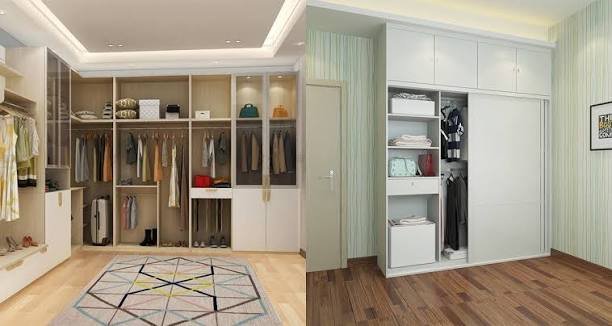
Built-In vs Freestanding Wardrobe: Quick Comparison
| Feature | Built-In Wardrobe | Freestanding Wardrobe |
|---|---|---|
| Installation | Fixed to/planned for the space | Movable furniture |
| Customisation | Excellent | Limited to available models |
| Floor-to-ceiling storage | Easy to achieve | Less common |
| Space efficiency | Excellent | Moderate |
| Portability | Poor | Excellent |
| Initial cost | Usually higher | Often lower |
| Installation time | Required | Minimal |
| Uneven/niche spaces | Excellent | Difficult |
| Repairs/replacement | More involved | Easier |
| Best for | Permanent homes | Rentals/frequent moves |
What Is a Built-In Wardrobe?
A built-in wardrobe is designed specifically for a particular location in a room.
It may extend:
- Wall to wall
- Floor to ceiling
- Around columns
- Into niches
- Around structural projections
The internal configuration can also be customised.
Instead of accepting a standard shelf arrangement, homeowners can decide how much space is allocated to hanging clothes, drawers, shoes, luggage and accessories.
Built-in wardrobes can use either hinged or sliding shutters, so the choice between built-in and freestanding is separate from the choice between sliding and hinged doors.
What Is a Freestanding Wardrobe?
A freestanding wardrobe is an independent piece of furniture.
It is manufactured as a complete unit and can normally be moved without making major changes to the room.
Traditional wooden almirahs, steel wardrobes and modern ready-made engineered-wood wardrobes all fall into this broad category.
Standard models may contain:
- Hanging rails
- Shelves
- Drawers
- Lockable compartments
- Mirrors
Their biggest advantage is independence from the building. If you relocate, the wardrobe can usually relocate with you, subject to its size and construction.
1. Space Utilisation
Winner: Built-in wardrobe
Built-in wardrobes can use areas that standard furniture often wastes.
Suppose a bedroom has a 9-foot ceiling.
A conventional freestanding wardrobe might stop well below it, leaving an unused area above where suitcases and boxes eventually accumulate.
A built-in design can extend storage to the ceiling.
It can also be tailored around:
- Columns
- Wall recesses
- Corners
- Beams
- Unusual wall dimensions
This is particularly valuable in apartments where every square foot of storage matters.
2. Customisation
Winner: Built-in wardrobe
Customisation is one of the strongest reasons to choose a built-in wardrobe.
The internal layout can be planned according to the people actually using it.
For example, you can specify:
- Long hanging section
- Short hanging section
- Adjustable shelves
- Internal drawers
- Jewellery drawer
- Trouser rack
- Shoe storage
- Luggage compartment
- Pull-out accessories
A couple sharing a wardrobe can even divide the interior into completely different configurations.
Freestanding wardrobes offer some internal variation, but you are largely restricted to the dimensions and layouts manufacturers sell.
3. Flexibility
Winner: Freestanding wardrobe
A freestanding wardrobe can move.
That simple feature creates considerable flexibility.
You can reposition it when rearranging the bedroom, move it to another room or take it to a new house.
A built-in wardrobe is effectively part of the room.
Moving it is usually impractical because its dimensions and panels were designed for one particular wall.
For someone who expects to relocate frequently, investing heavily in customised built-in furniture may not make financial sense.
4. Rented Homes
Winner: Freestanding wardrobe
Tenants generally benefit more from furniture they own and can take away.
A freestanding wardrobe requires little or no permanent modification to the property.
It also avoids spending heavily on customised storage that may eventually remain with the landlord.
A built-in wardrobe can make sense in a rental only in particular circumstances—for example, where the landlord provides it or where there is a long-term arrangement allowing the modification.
For most tenants, freestanding is the safer option.
5. Appearance
Winner: Built-in wardrobe
Built-in wardrobes can create a cleaner architectural appearance because they are designed as part of the room.
A floor-to-ceiling wardrobe can visually become an entire wall rather than appearing as a separate piece of furniture.
The shutters can coordinate with:
- Wall colours
- Bed finishes
- Flooring
- Dressing units
- TV units
- Study furniture
Modern built-ins can also hide awkward wall projections.
Freestanding wardrobes can certainly look attractive, especially solid-wood or designer pieces, but they usually remain visually identifiable as separate furniture.
6. Storage Capacity
Winner: Built-in wardrobe
For the same wall area, a well-planned built-in wardrobe usually extracts more useful storage.
The biggest advantage is vertical space.
Upper cabinets can store less frequently used items such as:
- Suitcases
- Blankets
- Winter clothes
- Extra bedding
- Travel bags
Internal dimensions can also be planned around specific belongings rather than generic shelf spacing.
However, more storage is not automatically better. Extremely deep shelves or poorly positioned upper compartments can become difficult to use.
Good internal planning matters as much as overall wardrobe size.
7. Installation
Winner: Freestanding wardrobe
A ready-made freestanding wardrobe may need assembly, but it generally involves far less site work.
Built-in wardrobes require several stages.
Depending on the construction method, these can include:
- Site measurement
- Design
- Material selection
- Fabrication
- Installation
- Hardware adjustment
- Final finishing
Errors in measurement can create uneven gaps or shutters that do not align properly.
For this reason, the final site dimensions should be taken carefully rather than relying solely on architectural drawings.
8. Maintenance and Repairs
Winner: Freestanding wardrobe, slightly
A freestanding wardrobe is easier to access as a complete piece of furniture.
In some cases, it can even be moved away from the wall for inspection or repair.
Built-in wardrobes can make certain areas harder to reach, especially where side or rear panels sit directly against walls.
This becomes important if the wall develops:
- Dampness
- Seepage
- Mould
- Pest problems
Any moisture problem should be corrected before installing a permanent built-in wardrobe.
Both wardrobe types also depend heavily on hardware quality. Hinges, drawer channels and sliding mechanisms may need adjustment or replacement during the wardrobe’s life.
9. Cost
Winner: Freestanding wardrobe for lower initial investment
Ready-made freestanding wardrobes are available across a very broad price range and can be economical because manufacturers produce standard sizes repeatedly.
Built-in wardrobes are usually more expensive because they involve custom measurements, materials, hardware, fabrication and site installation.
The final price depends on:
- Plywood or engineered board
- Laminate, acrylic, veneer or paint
- Wardrobe dimensions
- Hinged or sliding shutters
- Drawer hardware
- Mirrors
- Internal accessories
- Lighting
- Labour
However, comparing only the purchase price can be misleading.
A built-in wardrobe may provide substantially more usable storage from the same wall, so homeowners should also compare the storage capacity and specification they receive.
10. Moving to Another Home
Winner: Freestanding wardrobe
This is the category where the difference is absolute.
A freestanding wardrobe is intended to remain furniture.
A built-in wardrobe is intended to remain with the room.
Technically, some built-in units can be dismantled, but moving them is often inefficient. Wall dimensions, ceiling heights and installation conditions in the new property may differ.
Panels can also be damaged during dismantling and reinstallation.
If relocation is likely within a few years, portability deserves significant weight in the buying decision.
Which Wardrobe Is Better for Your Home?
Choose a built-in wardrobe if:
- You own the home and plan to stay long-term.
- Maximum storage is important.
- You want floor-to-ceiling cabinetry.
- The room has awkward dimensions or niches.
- Custom internal storage is required.
- You want the wardrobe integrated into the interior design.
Choose a freestanding wardrobe if:
- You live in a rented home.
- You expect to relocate.
- Budget is limited.
- You want furniture that can be repositioned.
- Standard storage dimensions meet your needs.
- Quick installation is important.
For a permanent apartment with limited storage, a built-in wardrobe usually makes better use of the available wall.
For rented accommodation, student housing or households that relocate regularly, a good freestanding wardrobe is generally the more sensible investment.
Check the Wall Before Installing a Built-In Wardrobe
Built-in wardrobes require one additional check that is easy to overlook: the condition of the wall behind them.
Do not permanently cover a wall that already shows signs of:
- Water seepage
- Damp patches
- Peeling paint
- Plumbing leakage
- Persistent condensation
Fix the underlying problem first.
Also plan for electrical points, switches, skirting, AC pipes and other services before fabrication begins.
For either wardrobe type, very tall or heavy furniture should be installed and secured appropriately. Follow the manufacturer’s or installer’s recommendations for stability, particularly where furniture could potentially tip.
FAQs
Q1. Which is better, built-in or freestanding wardrobe?
A. Built-in wardrobes are generally better for maximum storage, customisation and a seamless appearance. Freestanding wardrobes are better for portability, lower commitment and homes where occupants may relocate.
Q2. Is a built-in wardrobe good for a small bedroom?
A. Yes. A built-in wardrobe can use the full available wall and vertical space, making it particularly useful in compact bedrooms where storage needs to be maximised.
Q3. Which wardrobe is better for a rented house?
A. A freestanding wardrobe is generally better for tenants because it can be moved to another property and does not require substantial permanent modification to the room.
Q4. Are built-in wardrobes more expensive?
A. They are usually more expensive initially because they require custom design, fabrication, hardware and installation. Actual cost depends on size, materials, shutters and internal accessories.
Q5. Can a built-in wardrobe be moved to another house?
A. It may be technically possible to dismantle some systems, but built-in wardrobes are designed for specific room dimensions. Reusing the complete wardrobe elsewhere can therefore be difficult and may require modification or replacement panels.