








Sleep is much more than a period of rest. While you sleep, your brain performs essential functions that help maintain memory, learning, emotional well-being, and overall cognitive performance. Among the different stages of sleep, deep sleep—also known as slow-wave sleep—plays a particularly important role in restoring the brain and body.
Occasionally getting less deep sleep is common and usually not harmful. However, consistently poor-quality sleep or chronic sleep deprivation may affect brain function over time and has been associated with an increased risk of several long-term health problems. Understanding why deep sleep matters can help you adopt habits that support healthier sleep and better brain health.
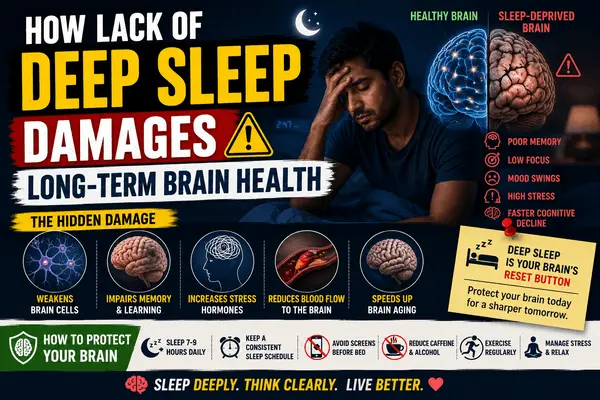
This article explains what deep sleep is, why it is important, and how a lack of deep sleep may affect your brain over the long term.
What Is Deep Sleep?
Sleep occurs in several stages that repeat throughout the night. These include light sleep, deep sleep, and rapid eye movement (REM) sleep.
Deep sleep usually occurs more during the first half of the night. During this stage:
- Brain activity slows significantly.
- The body repairs tissues.
- Hormones involved in growth and recovery are released.
- The immune system is supported.
- Energy stores are replenished.
It is also an important stage for memory consolidation and physical restoration.
Why Deep Sleep Is Important for the Brain
During deep sleep, the brain is actively involved in maintaining healthy function.
Research suggests that deep sleep helps:
- Strengthen newly learned information.
- Consolidate long-term memories.
- Support attention and concentration.
- Promote learning.
- Restore mental energy.
- Maintain healthy communication between brain cells.
Without sufficient deep sleep, these processes may become less efficient.
How Lack of Deep Sleep Affects Memory
One of the best-established roles of deep sleep is memory consolidation.
During the day, the brain continuously processes new information.
During deep sleep, it helps:
- Organize memories.
- Strengthen important information.
- Filter out unnecessary details.
People who consistently get insufficient deep sleep may notice:
- Forgetfulness.
- Difficulty learning new information.
- Reduced concentration.
- Slower recall of facts.
These effects are often more noticeable after several nights of poor sleep.
Reduced Attention and Concentration
Deep sleep contributes to mental alertness the following day.
Chronic lack of restorative sleep may lead to:
- Difficulty focusing.
- Slower reaction times.
- Reduced productivity.
- More mistakes at work or school.
- Increased risk of accidents while driving or operating machinery.
Even if you spend enough hours in bed, poor sleep quality can still affect daytime performance.
Effects on Emotional Health
Sleep and emotional well-being are closely connected.
Insufficient deep sleep has been associated with:
- Increased irritability.
- Mood changes.
- Higher stress levels.
- Reduced emotional resilience.
- Greater difficulty coping with daily challenges.
Poor sleep may also worsen symptoms in people living with certain mental health conditions. If sleep problems or mood symptoms persist, seek professional medical advice.
Brain Waste Clearance During Sleep
Research suggests that sleep supports the brain’s natural waste-clearing processes.
During sleep, the brain’s glymphatic system becomes more active, helping remove metabolic waste products that accumulate during waking hours.
Although research is ongoing, scientists believe that healthy sleep plays an important role in maintaining long-term brain health.
Possible Link With Dementia Risk
Long-term sleep deprivation has been associated in observational studies with an increased risk of cognitive decline and dementia.
However, it is important to understand that:
- Lack of deep sleep does not mean someone will definitely develop dementia.
- Dementia has many contributing factors, including age, genetics, cardiovascular health, and lifestyle.
Maintaining healthy sleep is considered one of several habits that support healthy brain aging.
Reduced Learning Ability
Students and professionals alike rely on sleep for learning.
Without adequate deep sleep:
- New information may not be stored efficiently.
- Problem-solving skills may decline.
- Creative thinking may become more difficult.
- Academic or workplace performance may suffer.
Getting enough restorative sleep is an important part of effective learning.
Increased Risk of Other Health Problems
Poor sleep doesn’t affect only the brain.
Chronic sleep deprivation has also been linked with an increased risk of:
- High blood pressure
- Type 2 diabetes
- Obesity
- Heart disease
- Weakened immune function
These conditions can indirectly affect brain health as well.
What Reduces Deep Sleep?
Several factors may interfere with deep sleep.
Common causes include:
- Irregular sleep schedules.
- Excessive caffeine late in the day.
- Alcohol consumption before bedtime.
- Stress and anxiety.
- Excessive screen time before sleep.
- Noise and light in the bedroom.
- Sleep disorders such as obstructive sleep apnea.
Identifying and addressing these factors may improve sleep quality.
How to Improve Deep Sleep
Maintain a Consistent Sleep Schedule
Go to bed and wake up at the same time every day, including weekends.
A regular schedule supports your body’s internal clock.
Limit Screen Time Before Bed
Blue light from phones, tablets, and computers can interfere with the body’s natural production of melatonin, a hormone that helps regulate sleep.
Try to avoid screens for at least an hour before bedtime.
Reduce Caffeine Intake
Avoid coffee, tea, energy drinks, and other caffeinated beverages later in the day if they interfere with your sleep.
Create a Comfortable Sleep Environment
Your bedroom should ideally be:
- Cool
- Quiet
- Dark
- Comfortable
Good sleep environments promote deeper, more restful sleep.
Exercise Regularly
Moderate physical activity during the day can improve overall sleep quality.
Avoid vigorous exercise immediately before bedtime if it disrupts your sleep.
Practice Relaxation Techniques
Relaxing activities before bed may help prepare your body for sleep.
Examples include:
- Reading a book
- Gentle stretching
- Deep breathing exercises
- Meditation
Find a routine that helps you unwind consistently.
When Should You See a Doctor?
Consult a healthcare professional if you:
- Regularly struggle to sleep.
- Wake up feeling unrefreshed despite adequate time in bed.
- Snore loudly or stop breathing during sleep.
- Experience excessive daytime sleepiness.
- Have persistent memory or concentration problems.
A sleep disorder such as insomnia or obstructive sleep apnea may require medical evaluation and treatment.
Common Mistakes to Avoid
Avoid these habits:
- Sleeping only a few hours during weekdays and trying to “catch up” on weekends.
- Using alcohol to help you fall asleep.
- Consuming caffeine late in the evening.
- Using electronic devices in bed.
- Ignoring persistent sleep problems.
Healthy sleep requires both adequate duration and good quality.
Conclusion
Deep sleep is one of the most important stages of the sleep cycle, supporting memory, learning, emotional balance, brain restoration, and overall cognitive function. Although missing a good night’s sleep occasionally is unlikely to cause lasting harm, chronic lack of deep sleep may affect attention, memory, mood, and long-term brain health. Research also suggests that healthy sleep supports the brain’s natural waste-clearing processes and may contribute to healthier cognitive aging.
The good news is that many factors affecting deep sleep are within your control. Maintaining a regular sleep schedule, limiting caffeine and screen time before bed, exercising regularly, and creating a comfortable sleep environment can all improve sleep quality. If you experience persistent sleep difficulties or symptoms of a sleep disorder, seeking medical advice is an important step toward protecting both your sleep and your long-term brain health.
FAQs
1. What is deep sleep?
Deep sleep, also called slow-wave sleep, is a stage of the sleep cycle during which the body repairs tissues, supports immune function, and helps the brain consolidate memories and recover from the day’s activities.
2. How much deep sleep do adults need?
There is no fixed target for deep sleep alone, as the amount varies by age and individual factors. Most adults are generally advised to aim for 7–9 hours of total sleep per night, allowing the body to cycle naturally through all sleep stages.
3. Can lack of deep sleep affect memory?
Yes. Deep sleep plays an important role in memory consolidation. Poor-quality or insufficient sleep may make it harder to learn new information and recall memories effectively.
4. Does poor sleep increase the risk of dementia?
Research suggests that chronic poor sleep is associated with a higher risk of cognitive decline and dementia, but it is only one of many contributing factors. Poor sleep alone does not mean someone will develop dementia.
5. How can I naturally improve deep sleep?
Maintaining a consistent sleep schedule, reducing evening screen time, limiting caffeine later in the day, exercising regularly, managing stress, and creating a cool, dark, quiet sleep environment can all help improve overall sleep quality and support healthy deep sleep.