A window that looks perfect in a showroom may become inconvenient once installed in the wrong location. A large casement window can provide excellent ventilation but needs clear space for its opening sash. A sliding window gives up some of that opening area but fits neatly where balconies, passages or exterior obstructions make outward-opening windows impractical.
That is why choosing between sliding and casement windows should be based on more than appearance. Room size, ventilation, weather sealing, available space, cleaning and budget all matter.
For Indian homes, sliding windows are usually more practical where space and ease of operation matter, while casement windows are generally better when maximum ventilation and tighter sealing are priorities.
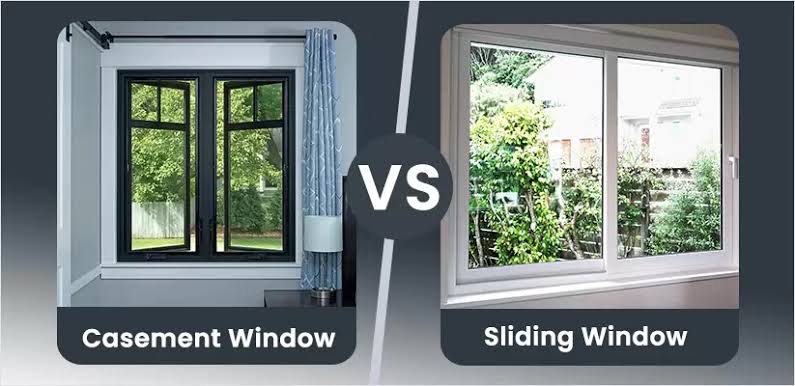
Sliding Windows vs Casement Windows: Quick Comparison
| Feature | Sliding Windows | Casement Windows |
|---|---|---|
| Opening mechanism | Sash slides horizontally | Sash swings on side hinges |
| Space requirement | Low | Requires opening clearance |
| Ventilation | Moderate | Excellent |
| Weather sealing | Good with quality system | Generally better |
| Air leakage | Can be higher | Usually lower |
| Maintenance | Relatively simple | More hardware involved |
| Cleaning | Depends on design | Can be less convenient externally |
| Large openings | Very suitable | Depends on sash size/design |
| Best for | Balconies, compact rooms | Bedrooms, kitchens, living spaces |
What Is a Sliding Window?
A sliding window normally consists of two or more panels fitted within tracks. One or more panels move horizontally to open the window.
Because the sash remains within the frame while opening, it does not project into the room or outside the building.
This makes sliding windows particularly useful where space is limited.
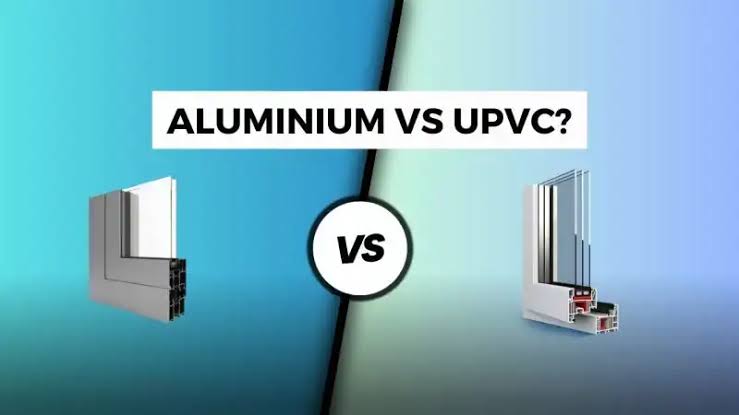
They are commonly used for balconies, apartments, bedrooms and large openings. Aluminium and uPVC are two common frame choices in Indian residential construction.
Their simple operating principle is also one of their main advantages: users generally only need to push the sash sideways.
What Is a Casement Window?
A casement window has a sash attached to the frame with hinges along one side. It opens in a similar manner to a door, although the exact operating hardware varies between window systems.
Casement windows can be designed as single or double sashes.
Because the complete sash can swing open, casement windows can provide a much larger unobstructed opening than many conventional sliding configurations.
Their closing mechanism can also pull the sash tightly against weather seals. Casement designs are consequently among the more energy-efficient types of operable windows because their construction can reduce opportunities for air leakage.
1. Ventilation
Winner: Casement windows
Ventilation is one of the biggest differences between the two designs.
With a typical two-panel sliding window, one panel moves behind the other. This means only part of the total window area can normally remain open at one time.
Casement windows can open most or all of the sash area.
Some casement configurations can also help catch breezes depending on their orientation and wind direction. Their top-to-bottom opening makes them particularly effective where strong natural ventilation is desirable.
For bedrooms, kitchens and living areas where airflow is important, casement windows therefore have a clear advantage.
2. Space Requirement
Winner: Sliding windows
Sliding windows do not require a swing area.
This is valuable when the window faces:
- A narrow balcony
- A passage
- An exterior walkway
- Nearby plants
- Another structural element
Casement windows need enough clearance for the sash to open.
Outward-opening casements can become inconvenient beside walkways, decks or similar spaces because the open sash projects into the surrounding area.
For compact apartments, sliding windows can therefore be the more practical option.
3. Weather Sealing and Air Leakage
Winner: Casement windows
The quality of the actual window matters more than the name of the opening style, but casement windows have an inherent advantage in sealing.
When a good casement window is closed, its locking mechanism presses the sash against the frame and weather seals.
This can produce a tighter closure.
Casement windows are commonly recognised as one of the more energy-efficient operable window designs for this reason. Their single-sash construction provides fewer opportunities for unwanted air leakage.
Sliding windows need clearance between moving components so the panels can travel along their tracks. Quality seals and good manufacturing can still provide strong performance, but inexpensive or poorly installed sliding systems may allow more air infiltration.
If you regularly use air conditioning, good sealing becomes particularly important.
4. Ease of Operation
Winner: Sliding windows for simplicity
A properly installed sliding window is straightforward to operate: unlock it and move the panel sideways.
There are relatively few operating components.
Casement windows may use handles, hinges, locking mechanisms and sometimes crank-style operators, depending on the system.
Neither design should be difficult to operate when properly manufactured and maintained. However, sliding windows have a simpler mechanism.
Track cleanliness matters. Dirt and debris accumulating in a sliding track can eventually make the sash harder to move.
5. Maintenance
Winner: Sliding windows, slightly
Sliding windows have relatively simple hardware, but their tracks need regular cleaning.
Dust is particularly relevant in many Indian cities. When dirt collects inside the bottom track, smooth movement and drainage can be affected.
Casement windows do not have the same long sliding track, but they contain hinges and additional operating hardware that may eventually require adjustment or maintenance.
The frame material also matters.
A high-quality uPVC or aluminium casement window may require less attention than a poorly manufactured sliding window, so opening style should not be considered independently of product quality.
6. Cleaning
Winner: Depends on accessibility
Sliding windows can be easy to clean internally, but cleaning the exterior face may be difficult in high-rise apartments unless the design permits safe access or removal by an appropriate professional.
Casement windows present a similar issue.
Some designs provide better access to the exterior glass than others.
For upper floors, cleaning should be considered during product selection rather than after installation. Never rely on leaning outside a window to reach exterior glass.
7. Security
Winner: Depends on hardware
Neither style is automatically secure simply because of its opening mechanism.
Security depends on factors such as:
- Frame strength
- Glass specification
- Lock quality
- Number of locking points
- Installation
- Hardware quality
Casement windows can be supplied with multi-point locking systems that secure the sash at several positions around the frame. Some manufacturers specifically offer multi-point perimeter locks on casement designs.
Sliding windows can also provide good security when fitted with quality locks and properly installed frames.
Compare the complete window system rather than choosing solely by opening style.
8. Cost
Winner: Usually sliding windows for budget-focused installations
There is no universal per-square-foot price for either design.
Costs depend on:
- Aluminium or uPVC profile
- Glass thickness and type
- Window dimensions
- Number of tracks
- Hardware
- Mesh
- Locks
- Finish
- Brand
- Installation
- City
Casement windows may cost more when they include sophisticated hinges, handles and multi-point locking hardware.
However, a premium sliding system can easily cost more than a basic casement window.
For an accurate comparison, request quotations using the same frame material, glass specification and approximate opening size.
9. Noise and Energy Efficiency
Winner: Casement windows, generally
Reducing outdoor noise requires much more than selecting a window style. Glass configuration, frame design, seals, installation quality and gaps around the window all matter.
Still, the tighter compression seal possible with a casement window can help reduce unwanted air leakage.
The same characteristic benefits thermal performance. Casement windows are generally among the more energy-efficient opening-window designs because the sash can seal tightly against the frame.
For a room facing heavy traffic or one that remains air-conditioned for long periods, a well-specified casement system may therefore be worth considering.
Simply choosing casement windows, however, will not compensate for unsuitable glass or poor installation.
Which Window Is Better for Different Areas?
Choose sliding windows when:
- Exterior opening space is limited.
- The window faces a balcony or narrow passage.
- You want a simple operating mechanism.
- You have a wide opening where sliding panels are convenient.
- Maximum ventilation is not the main priority.
Choose casement windows when:
- Maximum natural ventilation is important.
- Better weather sealing is a priority.
- The room is frequently air-conditioned.
- You want a larger clear opening.
- There is enough space for the sash to open safely.
For many Indian homes, using both types can be more sensible than selecting one throughout the property.
Sliding windows can work well around balconies and space-constrained areas, while casement windows can be used in bedrooms and living spaces where ventilation and sealing are more important.
FAQs
Q1. Which is better: sliding or casement windows?
A. Casement windows are generally better for ventilation and tight sealing, while sliding windows are more space-efficient and convenient for large or space-constrained openings.
Q2. Which window is better for air conditioning?
A. A high-quality casement window can provide a tighter seal when closed, which can help reduce unwanted air leakage. Glass specification and installation quality are equally important.
Q3. Are sliding windows cheaper than casement windows?
A. Sliding windows can be less expensive in some comparable configurations, but there is no universal rule. Frame material, glass, dimensions, hardware and brand can change the price substantially.
Q4. Which window provides better ventilation?
A. Casement windows generally provide better ventilation because the sash can open more fully. A typical sliding configuration keeps part of the opening covered by another panel.
Q5. Can I use both sliding and casement windows in the same house?
A. Yes. In fact, this is often the most practical solution. Sliding windows can be used where opening clearance is limited, while casement windows can be selected for rooms where ventilation, sealing and energy performance are higher priorities.