A light bulb may consume only a small amount of electricity compared with an air conditioner or water heater, but homes often use many bulbs for several hours every day. That makes efficiency, lifespan and replacement frequency important when choosing between LED and CFL lighting.
CFLs were once the popular energy-saving replacement for incandescent bulbs, but LED technology has changed residential lighting considerably. For most homes today, LED bulbs are the better choice because they generally consume less electricity for comparable light output, reach full brightness immediately, last longer and do not rely on mercury-containing fluorescent technology.
CFLs can still provide usable light, particularly when existing bulbs are already working, but there is usually little reason to select them over quality LEDs for a new residential lighting setup.
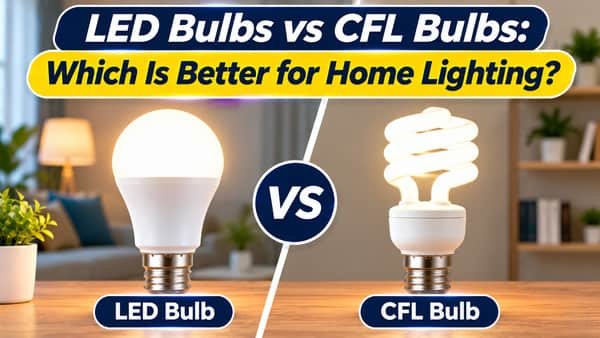
LED Bulbs vs CFL Bulbs: Quick Comparison
| Feature | LED Bulbs | CFL Bulbs |
|---|---|---|
| Energy efficiency | Excellent | Good |
| Typical lifespan | Longer | Shorter than LED |
| Full brightness | Immediate | May need warm-up time |
| Frequent switching | Better suited | Can reduce CFL life |
| Heat generation | Relatively low | Higher than LED in many cases |
| Mercury | No mercury in normal LED lighting technology | Contains a small amount of mercury |
| Dimming | Available on compatible models | Limited/product-dependent |
| Colour options | Extensive | Available but less flexible |
| Initial price | Affordable to premium | Often inexpensive where available |
| Best for new home lighting | Yes | Usually not preferred |
What Is an LED Bulb?
LED stands for Light-Emitting Diode.
Instead of producing light using a heated filament or fluorescent discharge tube, an LED uses semiconductor technology.
A household LED bulb contains more than the visible LEDs. It normally includes electronic driver components that convert the incoming electrical supply into the form required by the LEDs.
This means the quality of an LED bulb depends not only on the LED chips but also on:
- Driver quality
- Thermal management
- Housing
- Optical diffuser
- Electrical protection
- Overall manufacturing
A very cheap LED and a well-designed LED with the same wattage may therefore perform differently over time.
What Is a CFL Bulb?
CFL stands for Compact Fluorescent Lamp.
It is a smaller version of fluorescent lighting technology designed for common household fixtures.
Electricity excites mercury vapour inside the tube, producing ultraviolet radiation that causes the phosphor coating to emit visible light.
CFLs became popular because they use substantially less electricity than traditional incandescent bulbs for a comparable amount of light.
However, they have disadvantages including mercury content, warm-up behaviour and greater sensitivity to frequent switching.
LEDs have addressed many of these limitations.
1. Energy Efficiency
Winner: LED
LED bulbs generally produce more useful light for each watt of electricity consumed than CFL technology.
When comparing bulbs, do not look only at wattage.
Check the lumen output.
Watts tell you how much electrical power the lamp consumes, while lumens indicate the quantity of visible light produced.
For example, two bulbs can consume different wattages while producing a similar amount of light.
This makes lumens per watt a more useful efficiency comparison than wattage alone.
For a home with numerous lights operating for several hours each day, the efficiency advantage can accumulate over the bulb’s life.
2. Lifespan
Winner: LED
Quality LEDs generally have a much longer rated operating life than CFLs.
However, the number printed on a bulb package should not be interpreted as a guarantee that every lamp will operate for exactly that many hours.
LED life depends on factors such as:
- Driver quality
- Heat management
- Operating temperature
- Voltage conditions
- Fixture design
- Manufacturing quality
An LED installed inside a poorly ventilated enclosed fitting may experience more heat than one operating in a suitable open fixture.
CFL lifespan can also be affected by usage patterns, especially frequent switching.
When buying either technology, choose a reputable product with clear specifications and warranty information.
3. Instant Brightness
Winner: LED
LED bulbs generally reach their intended brightness almost immediately after being switched on.
CFLs can require some time to reach full light output, particularly depending on the lamp and environmental conditions.
This difference is especially noticeable in areas where lights are switched on for short periods, such as:
- Bathrooms
- Storerooms
- Corridors
- Staircases
- Utility areas
Waiting for a lamp to brighten gradually is unnecessary when an LED can provide immediate illumination.
4. Frequent Switching
Winner: LED
Some lights are switched on and off many times during a normal day.
This usage pattern can shorten the life of CFLs.
LEDs generally tolerate frequent switching much better, making them suitable for spaces with short, repeated periods of use.
This also makes LED technology useful with appropriately designed:
- Motion sensors
- Occupancy sensors
- Automated lighting controls
Compatibility with electronic controls should still be checked for the particular bulb and control system.
5. Heat
Winner: LED
LEDs are highly efficient, but they are not heat-free.
Their electronics and LED components generate heat that must be managed through the bulb’s design.
The important distinction is that LEDs generally convert a larger proportion of their electrical input into useful light than older lighting technologies.
CFLs also generate heat through their tube and electronic ballast.
For both technologies, follow the manufacturer’s recommendations regarding enclosed fixtures and operating conditions.
Good thermal management is particularly important for LED longevity.
6. Mercury and Disposal
Winner: LED
CFL technology uses a small amount of mercury.
That means spent or broken CFLs require more careful handling and should be directed to an appropriate collection or recycling route rather than casually discarded.
LED bulbs do not rely on mercury-containing fluorescent tubes.
However, LEDs are still electronic products containing components and materials that should ideally enter appropriate e-waste collection or recycling systems at the end of their useful life.
“Mercury-free” does not mean “throw anywhere.”
Responsible disposal is preferable for both.
7. Light Colour
Winner: LED
LEDs are available across a broad range of colour temperatures.
Common residential choices include:
- Warm white: creates a warmer, more relaxed atmosphere.
- Neutral white: provides a balanced appearance.
- Cool/daylight white: creates a brighter, cooler visual effect.
This allows different rooms to use different lighting moods.
For example, warm light may suit bedrooms and living spaces, while neutral or cooler light may be preferred for certain work areas.
CFLs are also available in different colour temperatures, but LEDs now offer a much broader consumer selection.
8. Dimming and Smart Lighting
Winner: LED
LED technology provides much greater flexibility for modern lighting systems.
Products are available with features such as:
- Dimming
- Adjustable colour temperature
- RGB colours
- Remote controls
- App control
- Voice-assistant integration
- Scheduling
Not every LED bulb is dimmable.
A dimmable LED must also be used with a compatible dimmer or control system.
Using incompatible equipment can cause flickering, poor dimming or other performance issues.
CFL dimming is possible with certain specialised products but is much less common in typical home installations.
9. Cost
Winner: LED over the long term
CFLs historically gained popularity because they reduced electricity consumption compared with incandescent lamps while remaining reasonably affordable.
LED prices have since fallen substantially.
The total cost of lighting should consider:
Total cost = purchase price + electricity consumption + replacements
A quality LED may provide savings through lower energy consumption and longer service life.
Actual savings depend on:
- Bulb wattage
- Daily usage
- Electricity tariff
- Product lifespan
- Purchase price
A light used for five hours every day offers a greater opportunity for energy savings than a storeroom bulb used for five minutes.
10. Environmental Considerations
Winner: LED, generally
LEDs have two important advantages over CFLs from an environmental perspective:
- Higher energy efficiency can reduce electricity consumption.
- They do not depend on mercury-containing fluorescent technology.
Their longer service life can also mean fewer replacement lamps over a given period.
However, LEDs contain electronic components and should be handled as electronic waste where appropriate collection systems are available.
Choosing durable products instead of repeatedly replacing very cheap lamps can also reduce waste.
Should You Replace Working CFLs Immediately?
Not necessarily.
If an existing CFL is functioning properly, replacing every bulb immediately may not always be necessary.
A practical strategy is to replace CFLs with LEDs:
- As CFLs fail
- In rooms where lights operate for many hours
- In areas with frequent switching
- When improving the lighting design
- During renovation
This allows the household to transition gradually without unnecessarily discarding functioning lamps.
If a CFL breaks, avoid treating the fragments like an ordinary broken incandescent bulb because fluorescent lamps contain mercury. Follow appropriate local guidance for cleanup and disposal.
How to Choose the Right LED Bulb
Do not replace a CFL simply by choosing an LED with the same wattage.
Compare lumens first.
Also check:
- Lumen output
- Wattage
- Colour temperature
- Colour Rendering Index (CRI), where specified
- Beam angle
- Base type
- Dimming compatibility
- Fixture compatibility
- Warranty
- Applicable product certification/marking
For Indian households, also choose electrical products from established manufacturers and look for applicable BIS requirements where relevant to the product category.
A low purchase price is not useful if the bulb flickers, fails prematurely or provides poor-quality illumination.
LED or CFL: Which Is Better for Home Lighting?
For new residential lighting, LED is the better overall choice in most situations.
Choose LED if you want:
- Lower electricity consumption
- Longer expected service life
- Immediate brightness
- Better tolerance of frequent switching
- More colour-temperature choices
- Smart-lighting options
- Mercury-free lighting technology
There is little practical reason to build a new home-lighting plan around CFL technology today.
Existing CFLs can continue to be used while functioning correctly, with replacement by suitable LEDs as they reach the end of their service life.
FAQs
Q1. Which is better for home lighting, LED or CFL?
A. LED bulbs are generally better because they are more energy-efficient, provide immediate brightness, typically last longer and do not use mercury-containing fluorescent technology.
Q2. Do LED bulbs use less electricity than CFL bulbs?
A. Generally, yes. LEDs can produce comparable light output using less electrical power. Compare lumens and wattage on the product specifications rather than wattage alone.
Q3. Which lasts longer, LED or CFL?
A. Quality LED bulbs generally have a longer rated lifespan than CFLs. Actual life depends on product quality, operating temperature, fixture design, voltage conditions and usage.
Q4. Should I replace all my CFL bulbs with LEDs?
A. You can prioritise frequently used lights and replace other CFLs as they fail. There is usually no need to discard every properly functioning CFL immediately unless you have a specific reason to upgrade.
Q5. Are LED bulbs completely heat-free?
A. No. LEDs still generate heat, particularly in their electronic components, but well-designed LED lamps manage this heat through their construction. Proper ventilation and fixture compatibility can affect their lifespan.