India’s courier export ecosystem is evolving rapidly, creating exciting opportunities for exporters, MSMEs, startups, artisans, and Direct-to-Consumer (D2C) brands. With recent reforms aimed at simplifying customs procedures and promoting e-commerce exports, businesses can now ship products overseas more efficiently than before.
One of the most significant changes is the removal of the earlier ₹10 lakh per-consignment value limit for commercial exports through courier mode. This reform, along with improvements in digital customs processing, is expected to make international shipping faster, more flexible, and more accessible for Indian businesses.
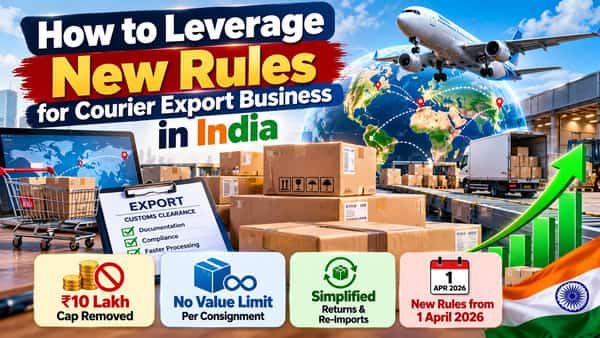
In this article, we’ll explain the latest courier export rules in India, their impact on businesses, and practical strategies to leverage these reforms for business growth.
Understanding Courier Exports
Courier exports involve shipping goods to international customers through authorized courier companies instead of traditional sea or air cargo channels.
Courier exports are commonly used for:
- E-commerce orders
- Product samples
- Fashion and apparel
- Handicrafts
- Electronics accessories
- Jewellery (subject to applicable regulations)
- Documents
- Small business shipments
Courier mode is particularly popular among MSMEs because it offers quicker delivery and simplified documentation for eligible shipments.
What Are the New Courier Export Rules?
The government has introduced reforms to strengthen India’s cross-border e-commerce ecosystem and improve ease of doing business.
Some key changes include:
- Removal of the earlier ₹10 lakh per-consignment value cap for commercial courier exports.
- Streamlined electronic customs processing.
- Faster customs clearance through updated courier regulations.
- Improved support for cross-border e-commerce exports.
- Simplified procedures for courier shipping documentation.
These reforms are intended to help Indian exporters compete more effectively in global markets.
Benefits for Export Businesses
1. Ship Higher-Value Orders
Previously, exporters shipping goods valued above ₹10 lakh often had to use conventional cargo channels.
With the removal of this value cap, businesses can now send higher-value commercial consignments through courier mode, subject to applicable customs regulations. This offers greater flexibility, particularly for MSMEs and e-commerce exporters.
2. Faster International Deliveries
Courier services generally provide:
- Quicker transit times
- Door-to-door delivery
- Shipment tracking
- Simplified customer experience
Combined with streamlined customs procedures, businesses can improve delivery timelines and customer satisfaction.
3. Better Opportunities for E-Commerce Exporters
Cross-border online selling continues to grow rapidly.
The updated courier regulations make it easier for:
- Online sellers
- D2C brands
- Marketplace exporters
- Small manufacturers
to fulfil international orders more efficiently through courier channels.
How Businesses Can Leverage the New Rules
Expand International Sales
If your business previously focused only on domestic customers, consider expanding into overseas markets.
Popular export products include:
- Handmade products
- Apparel
- Home décor
- Organic foods (where permitted)
- Beauty products
- Lifestyle accessories
- Stationery
- Educational products
Growing international demand creates opportunities for Indian brands.
Improve Order Fulfilment
Fast delivery improves customer satisfaction.
Businesses should:
- Maintain accurate inventory.
- Process orders quickly.
- Use secure packaging.
- Provide shipment tracking.
Efficient fulfilment increases repeat purchases and positive reviews.
Build Cross-Border E-Commerce Channels
Instead of relying on a single marketplace, diversify your sales channels by using:
- Your own e-commerce website.
- International online marketplaces.
- Social commerce platforms.
- B2B export portals.
Multiple sales channels reduce business risk and expand market reach.
Choose Reliable Courier Partners
Select courier providers based on:
- Global network coverage
- Delivery performance
- Customs expertise
- Tracking capabilities
- Customer support
- Competitive pricing
Reliable logistics partners contribute significantly to customer satisfaction.
Maintain Proper Export Documentation
Even with simplified procedures, businesses must maintain accurate documentation.
Depending on the nature of the export, documentation may include:
- Commercial invoice
- Packing list
- Shipping documents
- Export declarations
- Product certifications (where required)
- Foreign buyer details
Keeping complete records helps avoid customs delays.
Focus on Product Compliance
Different countries have different import regulations.
Before exporting, verify requirements related to:
- Product labeling
- Safety standards
- Packaging regulations
- Country-specific certifications
- Restricted products
Meeting destination-country requirements helps reduce shipment rejections.
Invest in Digital Systems
Modern export businesses benefit from digital tools.
Useful technologies include:
- Inventory management software
- Order management systems
- Accounting software
- Shipping automation tools
- Customer relationship management (CRM) software
Automation reduces manual errors and improves operational efficiency.
Strengthen Your Brand
The new courier export rules create opportunities, but long-term success depends on building a strong brand.
Focus on:
- Professional packaging
- Consistent product quality
- Responsive customer support
- Attractive product photography
- Clear product descriptions
Strong branding can help businesses compete globally beyond price alone.
Manage Foreign Payments Efficiently
International sales involve foreign currency transactions.
Businesses should:
- Use authorized payment channels.
- Track export proceeds.
- Maintain proper financial records.
- Reconcile payments regularly.
Good financial management supports smooth export operations and regulatory compliance.
Challenges Businesses Should Prepare For
Despite the reforms, exporters should remain aware of potential challenges.
International Competition
Global customers have numerous purchasing options.
Businesses should compete through:
- Product quality
- Competitive pricing
- Reliable delivery
- Excellent customer service
Shipping Costs
Courier exports may still involve significant logistics costs depending on:
- Destination country
- Package size
- Weight
- Delivery speed
Optimizing packaging and negotiating shipping rates can improve profitability.
Customs Regulations Abroad
Each importing country has its own customs procedures.
Businesses should research destination-country requirements before accepting international orders.
Common Mistakes to Avoid
Many new exporters encounter avoidable problems.
Avoid these mistakes:
- Choosing courier partners based only on the lowest price.
- Ignoring international labeling requirements.
- Using poor-quality packaging.
- Maintaining incomplete export documentation.
- Failing to calculate total shipping costs.
- Depending on a single export marketplace.
- Not monitoring customer feedback.
Careful planning can significantly improve export success.
Future Outlook
India’s courier export reforms are expected to strengthen cross-border e-commerce by making exports more efficient and business-friendly. The removal of shipment value restrictions, enhanced electronic customs processing, and continued focus on digital trade are likely to benefit MSMEs, startups, manufacturers, and D2C brands seeking international growth.
Businesses that invest in quality products, efficient logistics, and strong branding will be well-positioned to take advantage of these opportunities.
Conclusion
The latest courier export reforms mark an important step toward making India a stronger participant in global trade. By removing the earlier ₹10 lakh per-consignment value cap, streamlining customs procedures, and supporting digital export processes, the government has created new opportunities for exporters of all sizes.
To fully leverage these changes, businesses should focus on building efficient export operations, maintaining compliance, choosing reliable logistics partners, and expanding into international markets through multiple sales channels. With proper planning and execution, Indian businesses can use these reforms to reach new customers, improve operational efficiency, and grow their global presence.
FAQs
1. What is the major change in India’s new courier export rules?
A. One of the most significant changes is the removal of the previous ₹10 lakh per-consignment value limit for commercial exports through courier mode, providing greater flexibility for exporters.
2. Who benefits the most from these reforms?
A. The reforms are particularly beneficial for MSMEs, startups, D2C brands, artisans, manufacturers, and e-commerce exporters looking to sell products internationally.
3. Do businesses still need export documentation?
A. Yes. Although procedures have been streamlined, exporters must continue maintaining the required shipping, customs, and commercial documentation in accordance with applicable regulations.
4. How can businesses increase courier export sales?
A. Businesses can expand internationally by selling through multiple online channels, choosing reliable courier partners, maintaining high product quality, optimizing packaging, and providing excellent customer service.
5. What should exporters consider before shipping products overseas?
A. Before exporting, businesses should verify destination-country import regulations, prepare accurate documentation, understand shipping costs, ensure product compliance, and use authorized payment and logistics channels.